Two-Year Dormant Season Burn
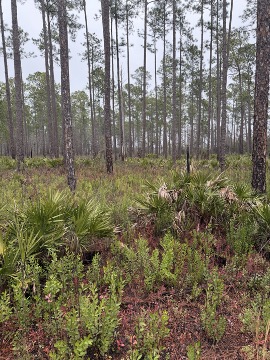
To demonstrate the effects of a two-year burn interval during the dormant season (November-February), on the understory community composition and pine regeneration in a pine flatwoods ecosystem.
Read MoreSingle tree selection harvesting with longleaf pine underplanting and herbicide application
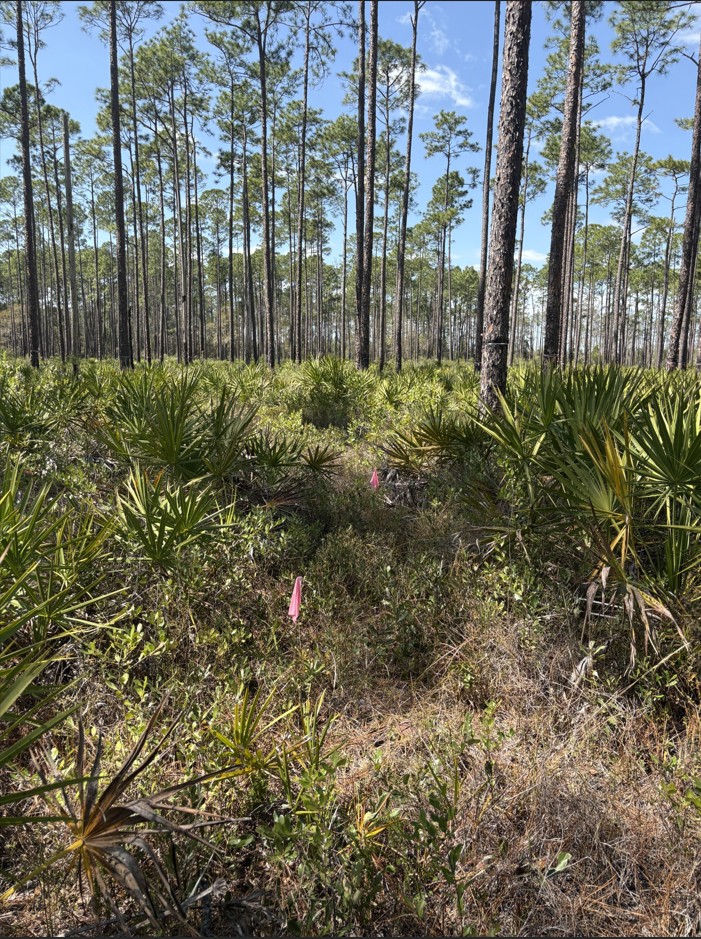
The objective of this study is to investigate how to accelerate the development of a multi-layered forest structure in a longleaf-slash pine flatwoods stand that is even-aged with little structural diversity (i.e., different sized trees). The stand overall is being managed to transition from an even- to uneven-aged forest as would be indicated by having a diversity of tree sizes.
This entry describes a single tree selection harvest, which involves cutting individual trees throughout the forest with little development of canopy gaps.
Read MoreGroup tree selection harvesting with longleaf pine underplanting and herbicide
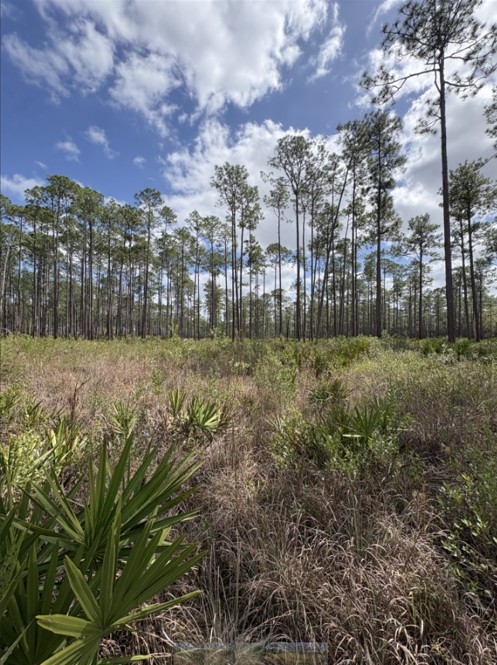
The objective of this study is to investigate how to accelerate the development of a multi-layered forest structure in a longleaf-slash pine flatwoods stand that is even-aged with little structural diversity (i.e., different sized trees). The stand overall is being managed to transition from an even- to uneven-aged forest as would be indicated by having a diversity of tree sizes.
This entry describes a group tree selection harvest, which involves cutting groups of trees throughout the forest with a focus on creating canopy gaps.
Read MoreThree year burn frequency: Effects on a piney flatwoods ecosystem
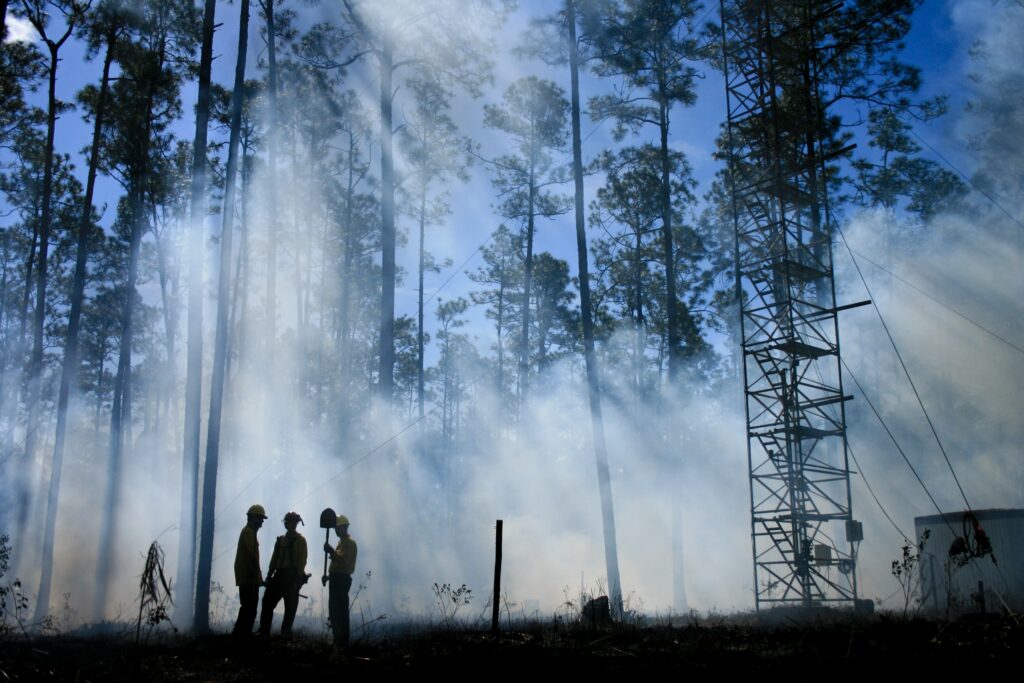
The objective of this demonstration area is to contrast the effects of fire frequency on understory species composition in a mixed longleaf (Pinus palustris) and slash pine (Pinus elliottii) flatwoods forest. Two adjacent stands feature one- and two-year burn frequencies and offer a visual contrast with this three-year burn area.
Read MoreSummer Annual Prescribed Burn
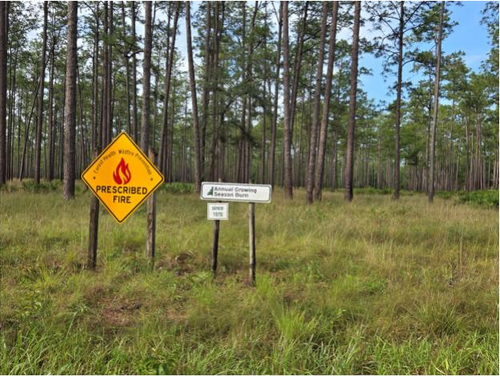
Demonstrate the effects of annual prescribed fire during the summer (approximately May-July), on the understory and regeneration of a flatwoods site.
The study area is adjacent to a flatwoods forests burned on 2- and 3-year intervals. It provides a striking visual contrast on how these burn intervals affect understory species composition.
Read MoreComparing planted longleaf pine growth response to prescribed fire and mowing treatments
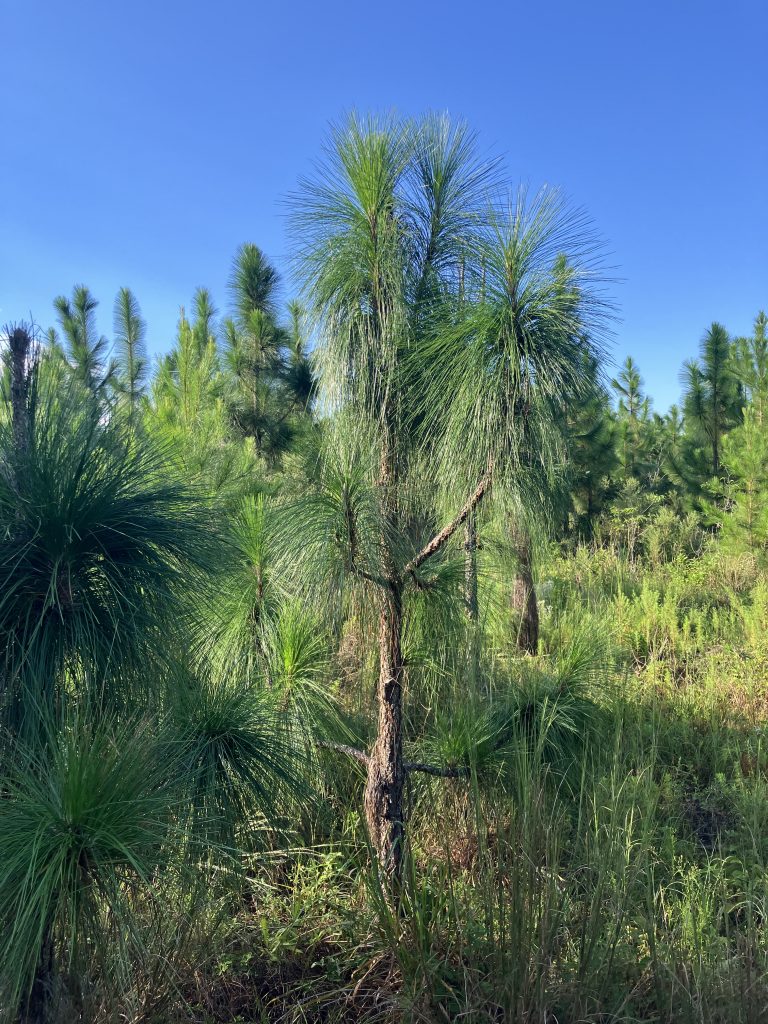
Compare how early treatments of prescribed fire and mowing in planted longleaf pine (Pinus palustris) plantations differently affect pine growth.
Provide landowners with a better understanding of how silvicultural actions affect longleaf pine establishment and growth.
Read More